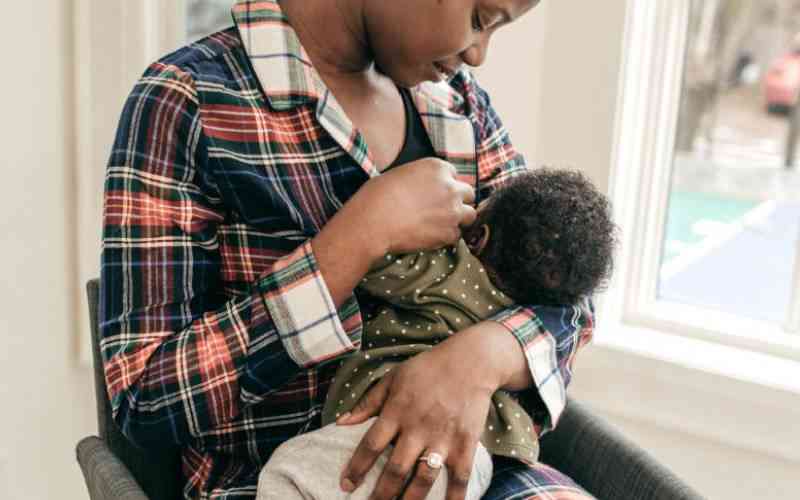
Exclusive breastfeeding is directly tied to lower infant mortality and reduced paediatric hospitalisations. [Courtesy]
For close to one year, the staff’s lactation room at Nakuru Level Five Hospital has become almost like a kitchen to Mercy Wanjiru.
To her, it is a constant room that she visits to express her breast milk and even store it in a special fridge for later pickup when she is leaving for home.
“Life has become a lot easier now. Since I resumed work from maternity leave, I have been constantly expressing the milk here to keep the baby going even when I am working,” Wairimu says.
Unlike many other working women whose return to work after three months of maternity leave marks a painful, silent surrender as they are forced to pump milk in unsanitary places like toilets or even parked cars, Wanjiru had the privilege of exclusively breastfeeding her child for six months.
“When a workplace has a lactation room like this with all the equipment that helps women like me express breast milk, a mother can fully adhere to the six months of exclusive breastfeeding. This is because the workplace understands that a child’s health is way more important,” she said.
Wanjiru works at the hospital as a nutritionist and is among the few career women at reproductive age who get to access the facilities without straining.