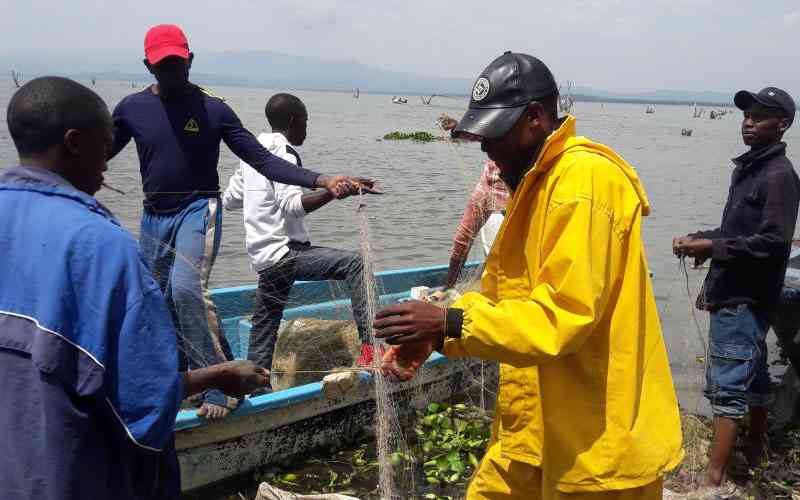
Fishermen around Lake Naivasha prepare their nets for fishing in the water body that is currently facing tens of challenges including illegal fishing, an increase in water hyacinth and encroachment on riparian land. [File, Standard]
The Kenya Marine and Fisheries Research Institute (KMFRI) has partnered with fishermen to restore the degraded papyrus weed around the troubled Lake Naivasha.
Under the project, funded by WWF, the first phase will target the restoration of 30 acres of the weed, which acts as breeding grounds for fish and a buffer against pollution.
Currently, over 70 per cent of the weed has been destroyed through illegal cultivation, encroachment of riparian land and feed for livestock, a move that has adversely affected fish production.
According to Edna Waithaka, in charge of KMFRI Naivasha, the lake's ecosystem had been adversely affected by the destruction of the papyrus, with waste and silt openly flowing into the lake.
The senior scientist noted that over 70 per cent of the weed had been destroyed over the last 20 years, with the situation getting worse by the day.
“This weed is critical in protecting the lake from effluents from nearby estates, farms and hotels and thus the need to rejuvenate it so that we can stop any form of pollution,” she said.
Speaking after a stakeholder meeting in Naivasha, she said that plans were underway to first restore 30 acres before targeting an extra 100 acres in two years.