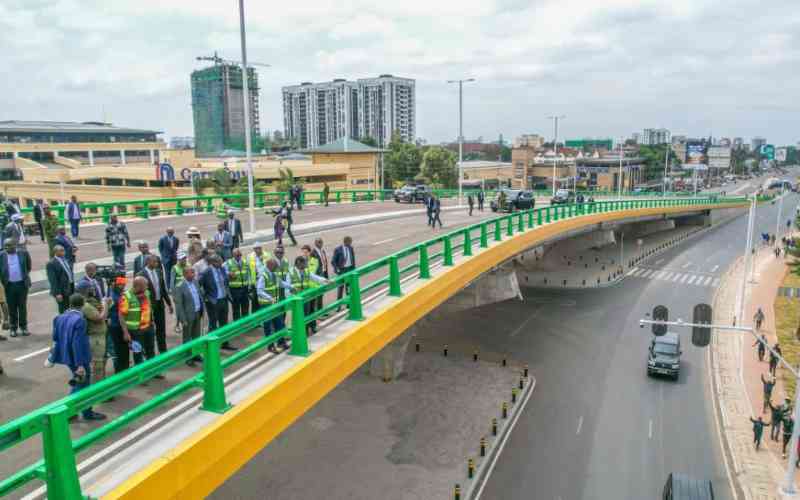
Lead image for Why Kenya should design every road around human life.
About seven years ago, a motorcycle crash took my dear friend Mwathe, the breadwinner for his family. The funeral ended, but the crash did not. It followed his family home as unpaid school fees, uncertain meals, interrupted dreams, and an empty chair.
Over the years, his family has become part of my own, teaching me that a road fatality is never just one death but a continuing economic and emotional collision borne by those left behind.
This is why the National Assembly’s passage of the Kenya Roads Amendment Bill, 2024, on August 13, 2026, which mandates designated infrastructure for pedestrians, cyclists, and other non-motorised users, deserves our support. Yet lanes alone will not solve the deeper problem. Kenya must move road safety from the roadside, where crashes occur, to the drawing board, where they can be prevented.
The National Transport and Safety Authority has worked for years through education, regulation, data, vehicle inspections, and enforcement. National road authorities, county governments, engineers, police, and the Kenya Roads Board also share responsibility. Kenya has updated design manuals and a National Road Safety Action Plan for 2024 to 2028. Accordingly, our challenge is not lack of knowledge but making safety binding throughout every road’s life.
This concern is not new to me. Over a decade ago, Green Africa Foundation worked with UN Habitat to study bicycle use along the Outer Ring Road, Thika Superhighway, and Waiyaki Way. We distributed bicycles to schools and communities and helped establish dedicated bicycle parking near Yaya Centre.
In 2015, I wrote in this newspaper that roads belong not only to motorists but also to cyclists and pedestrians. I cycle regularly, and I know how quickly a walkway or cycling space can be taken over by a ditch, a parked vehicle, or speeding traffic.
Later, while serving as Chair of the Motorcycle Assemblers Association, I discussed safety with the head of our highway authority, who candidly acknowledged that motorcycles had not historically been adequately considered in many road designs. Kenya expanded the motorcycle economy faster than it redesigned the road ecosystem around it.