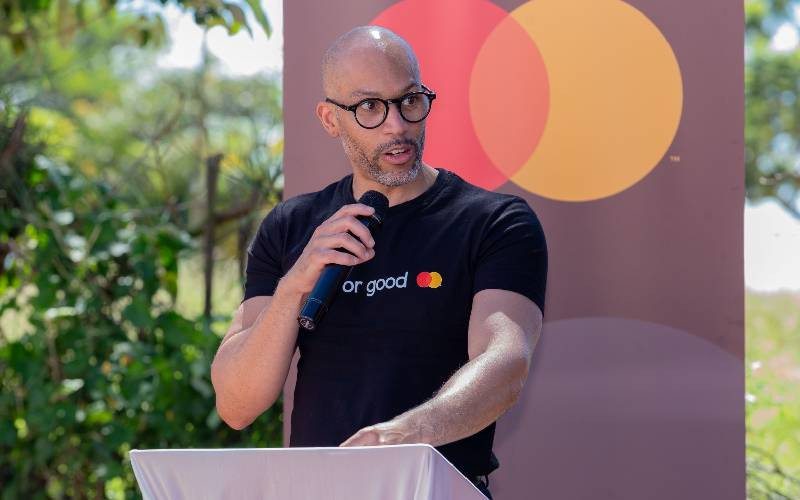
Randall Tucker, executive vice president and chief community and belonging officer at Mastercard. [Courtesy]
I have spent more than twenty years working on inclusion inside large companies, and I have learned that the work only holds up if you measure it the same way you measure everything else in the business. Not as a value statement, but a profit and loss statement.
For years, companies have treated inclusion and belonging as questions of workplace culture. But the next phase of business competition will increasingly test whether organisations can turn inclusion into measurable value: attracting talent, improving products, expanding markets and building trust.
The more interesting test is not whether a company says the right things about inclusion. It is whether inclusion shows up in what the company actually builds. My favorite example is a physical feature: the Mastercard Touch Card™. We worked with blind and low sighted people to design a card identifiable by touch alone, using a different notch for credit, debit and prepaid.
The standard works at point-of-sale terminals and ATMs, so it can scale. A prime example of this impact is in the UK, where Mastercard’s Touch Card design has played a key role in shaping UK Finance’s new Accessible Cards Code of Practice. By sharing our design specifications for tactile notches, we are helping establish the standard that is expected to see an industry wide adoption of roughly 80 per cent of all personal banking cards across the UK, making payments more inclusive for people with vision needs
Partnering with communities is key to how we do this. We built with blind and partially sighted users in the room from the start, ensuring that the solutions we built addressed their pain points.
The result was not a niche product for a narrow population. It became a mainstream design improvement, the kind of fix that, once you see it, looks like it should have been obvious all along. That is usually what inclusive design looks like when it works — ensuring that everyone has equal access, not just after the fact.