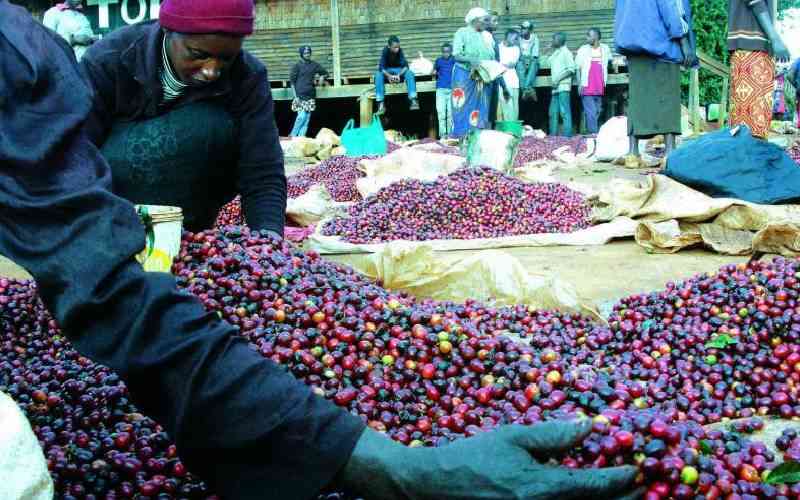
Coffee farmers sort out berries. European Union Deforestation Regulation covers seven commodities including coffee, cocoa and palm oil. [File, Standard]
For much of the past two years, the debate around the European Union Deforestation Regulation (EUDR) has focused on risks.
Exporters worry about rising compliance costs. Cooperatives fear the burden of collecting geolocation data from thousands of smallholder farmers. Policymakers question whether the regulation shifts the cost of environmental protection onto producing countries.
These concerns are legitimate. Yet they risk overlooking a bigger reality: EUDR is reshaping the rules of global agricultural trade.
For Africa, that presents an opportunity as much as a challenge.
The regulation, which covers seven commodities including coffee, cocoa and palm oil, requires companies placing products on the EU market to demonstrate they are deforestation-free and legally produced.
Large and medium-sized companies must comply from December 30, 2026, while micro and small enterprises have until June 2027.
The stakes are high. The European Union (EU) imports over €170 billion (Sh25.39 trillion) worth of agri-food products annually, making it one of the world’s largest agricultural import markets. For East African exporters of coffee, tea, timber and other commodities, as well as West African producers of palm oil and other agricultural exports, maintaining access to this market is critical.