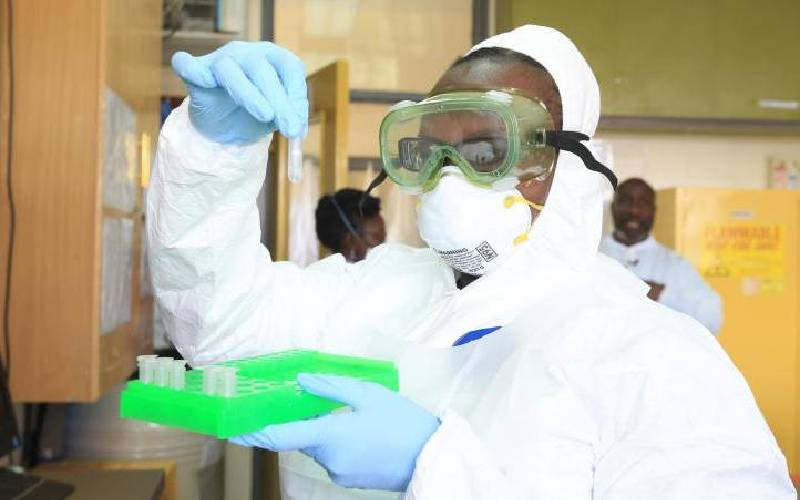
KEMRI lab scientist Dr Edith Koskei displays coronavirus samples obtained from the public in Nairobi on March 24, 2020 . [File, Standard]
For too long, medical research in Africa was described in the passive voice. Trials were "hosted" here. Samples were "collected" here. The discoveries, somehow, were credited elsewhere. That is changing, and fast. Across the continent, African scientists are no longer merely participating in global health research; they are designing it, leading it and interpreting it.
This is not a matter of pride alone; it is one of survival. When Africa invests in its own research capacity, it strengthens health security, creates skilled jobs, and ensures that lifesaving vaccines are built for African realities from the start. The conviction behind it is simple: the science that ends our deadliest diseases must be led by the people who live closest to them.
The evidence is already here. African research centres have contributed the samples, data and leadership that reshaped global understanding of HIV transmission, broadly neutralizing antibodies and vaccine design. This was not a supporting role. It was science conceived and conducted in African populations, for the diseases that burden the continent most.
That foundation is now bearing fruit across new frontiers. In tuberculosis — still one of Africa's deadliest infections — sites in South Africa, Kenya and Tanzania are running late-stage trials of the MTBVAC vaccine in adults and adolescents. In West Africa, institutions are evaluating a vaccine against Lassa fever, an illness the world too often ignores precisely because it is African and defining what trial readiness means in endemic settings.
None of this happens by accident; it happens through partnership built on shared priorities and trust. The ADVANCE programme connected clinical research centres across Kenya, Uganda, Rwanda, Zambia and South Africa into a single regional platform, a model now extended to TB readiness and Lassa fever preparedness, so the region can move faster, learn together and respond to outbreaks before they spread.
The deeper investment is in people. This work has built a pipeline of African scientists, clinicians, laboratory specialists, data managers and research leaders, through doctoral and postdoctoral training, leadership development and hands-on work with advanced laboratory platforms now being turned toward TB and emerging infections.