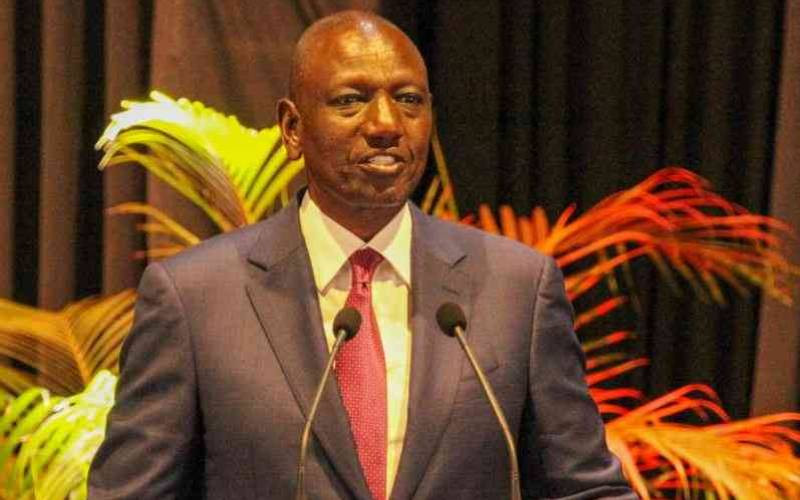
President William Ruto .[File, Standard]
There is nothing wrong with dreaming of Singapore. A nation without a dream is merely a village waiting for tomorrow to happen to it. President William Ruto’s call for a national conversation on Kenya’s long-term future is therefore not the problem. The destination is admirable. The question is whether we are preparing the traveller.
The village has always understood ambition better than national planners sometimes do. A young man may announce that he wants to become a doctor, pilot, professor or president, and the elders will smile. But if he declares that tomorrow he will walk barefoot to Nairobi, overtake a man who left forty days ago and return as governor by Friday without shoes, food or even a walking stick, the village may recommend a small stroke to restore contact between the dream and the head.
Ambition is healthy. Plato feared fiction could seduce society from truth; Aristotle saw imagination as capable of revealing what is possible. The village takes the practical middle ground: dream of heaven, by all means, but first find the road out of the compound.
That is Kenya’s dilemma. We want the Singapore destination while occasionally walking in the opposite direction.
Singapore did not become prosperous merely because somebody imagined prosperity. It invested in human capital, disciplined institutions, professional competence and long-term execution. Kenya can announce a knowledge economy while professors endure unpaid salaries, weak university financing, collapsing morale and endless battles over basic working conditions. Universities are expected to manufacture innovation while surviving on crumbs.
At school level, the parent is increasingly becoming the hidden Ministry of Education, paying fees, trips, remedial lessons, swimming, motivation charges and assorted “small contributions” that multiply like rabbits. Soon a child may need a bursary to finance a school trip to the neighbouring market. Yet we wonder why our graduates memorise brilliantly and invent timidly.
Then comes Kenya’s peculiar assault on expertise. An engineer may spend years mastering structural design, surveying, roads and professional standards, yet a politically connected contractor with little technical knowledge can receive a public tender and hire the engineer to design and supervise the work for peanuts.