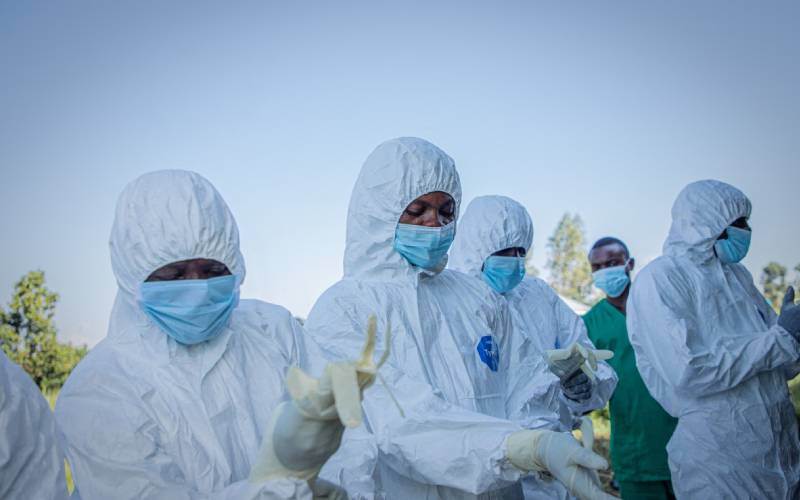
Volunteers put on their personal protective equipment before recovering the body of a 3-year-old child, presumed to have died of Ebola virus disease, in Bunia on June 11, 2026. [AFP]
The Ebola outbreak in the Democratic Republic of Congo (DRC) is pushing an already fragile health system to its limits, with frontline health workers bearing a heavy and deadly burden. According to the World Health Organisation (WHO), 155 health workers have been infected, and tragically, 45 of them have died, reflecting a fatality rate of almost 3 out of 10, or about 29 per cent among infected health staff.
Frontline teams face immense pressure as they monitor 19,630 contacts, manage 751 active Ebola cases in isolation, and operate across 47 health zones with active transmission in five provinces. The outbreak has expanded to six provinces and 55 health zones, with the latest confirmed case detected in Bas-Uélé province after a patient travelled from Haut-Uélé. This geographic spread requires response teams to extend their surveillance and containment capabilities across larger areas.
Healthcare workers play a central role in controlling this outbreak by tracing contacts, isolating and caring for patients, collecting samples, and enforcing infection prevention measures. Yet, the strain on these workers is exacerbated not only by the risk of infection but also by systemic issues including unpaid wages and poor working conditions.
In July 2026, Ebola response workers in Ituri province initiated strike action over unpaid salaries and inadequate support. As reported by Reuters, some treatment centres closed temporarily during these strikes, interrupting patient care and surveillance efforts at a critical moment when confirmed cases had already surpassed 2,000.
The 155 infected health workers represent about 3.1 per cent of all confirmed cases in the country, and the 45 deaths constitute nearly 2 per cent of the overall confirmed death toll, underscoring the disproportionate impact on the response workforce.