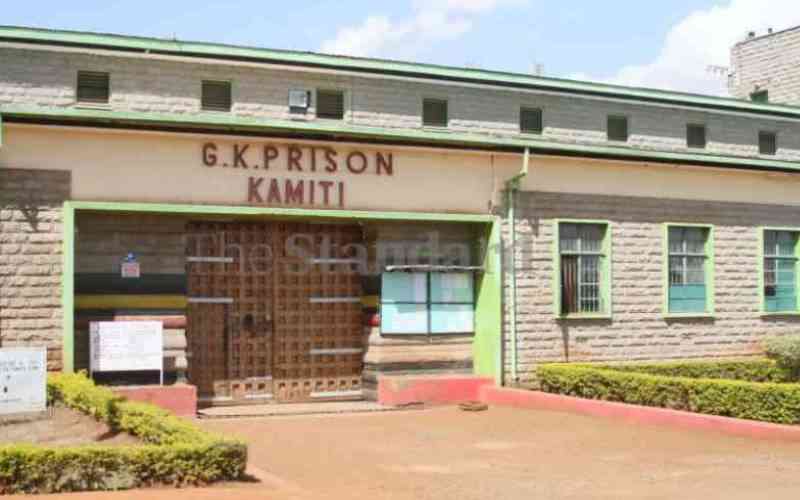
Kamiti Maximum Prison. [File, Standard]
The Power of Mercy Bill (National Assembly Bill No. 56 of 2025) has now been read a second time in the National Assembly, which, among other issues, seeks to give the President the power to pardon.
The Bill was moved by Marsabit County MP Naomi Waqo, who said that it will operationalise Article 133 of the Constitution and specifically provide a legal framework for the four forms of mercy under Article 133(1)(a)–(d).
She said these include a free or conditional pardon for a person convicted of an offence, a respite, either indefinitely or for a specified period, from carrying out a punishment imposed on a person, a substitution of a less severe form of punishment for one imposed on a person and a remission of all or part of a punishment imposed on a person.
“I beg to move that the Power of Mercy Bill (National Assembly Bill No. 56 of 2025) be read a second time. The power of mercy under Article 133 of the Constitution lets the state balance strict criminal laws with grace, forgiveness and healing for reformed offenders,” she said.
She said the country has the Power of Mercy Act CAP 94, which was enacted in 2011 to operationalise Article 133 and while it has served the country over the years, experience in implementation has revealed instructional and operational gaps that require legislative reforms.
Waqo said the Bill is a step forward in updating the laws, creating transparent systems for presidential pardon and replacing old rules with a modern framework that respects human rights.
“This will help Kenyans so that presidential pardon can be in place. The objective of this Bill is to give full effect to Article 133 by establishing a structured statutory framework for the exercise of the Power of Mercy by the President,” she said.