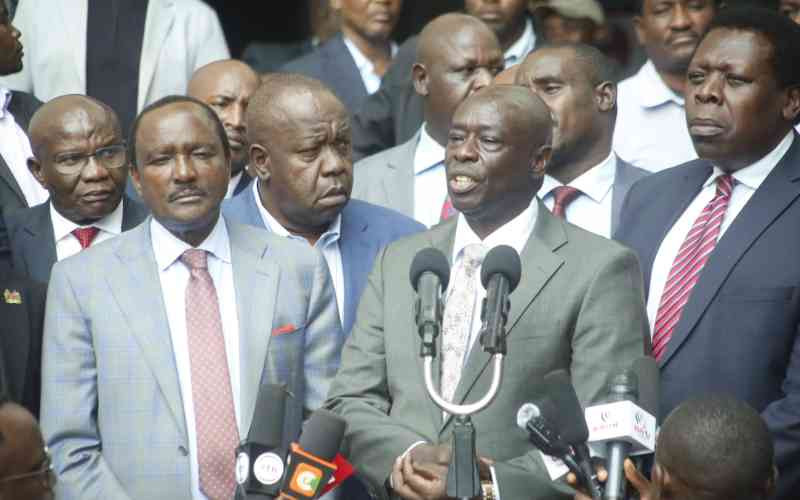
Lead image for The opposition must break away from the past to unveil Kenya's future.
If the Opposition wants to represent change, it must be seen to break with the past. Kenyan politics has entered a defining moment. For perhaps the first time in years, the national conversation is no longer about replacing one administration with another.
Increasingly, it is about replacing an entire political culture. Across the country, citizens are expressing frustration deeper than dissatisfaction with the government. They are questioning a governance model marked by graft, growing debt, impunity, high taxation, weak accountability, and politics driven more by elite bargains than public interest.
This is why the Opposition faces an enormous opportunity and responsibility. Its greatest asset is not any leader. It is public belief that genuine change may finally be possible. That belief is fragile. It can be strengthened by wise choices or destroyed by careless ones. One choice concerns who should shape and symbolise the Opposition. Former President Uhuru Kenyatta remains influential. He served two terms and retains relationships across the political spectrum. His experience matters.
But influence and suitability are not the same thing. If the Opposition’s central message is that Kenya needs a decisive break from the politics that produced today’s economic and governance challenges, then allowing a former president closely associated with the previous order to be the public face or principal organiser of that movement risks weakening its credibility.
Politics is driven as much by perception as reality. Kenyans associate the last decade with rising public debt, corruption scandals, inequality, and frustration among young people seeking opportunity. Whether every criticism of that administration is fair is open to debate. What is clear is that many voters see the old establishment as part of the problem, not the solution.
An opposition movement seeking hope cannot appear captive to that establishment. The country is witnessing a different political energy. Much of it has come from ordinary citizens, especially youth, demanding constitutionalism, transparency, accountability, and prudent public finance. Their rallying cry is not change of government. It is change of governance.
This matters. Replacing personalities while preserving the same political culture will not satisfy a generation demanding stronger institutions, cleaner government, and an accountable state. The same applies in Mt Kenya. Recent developments suggest that Rigathi Gachagua has become one of the most influential political figures in the region. His ability to mobilise support has altered the landscape and contributed to opposition momentum. Whatever one’s preference, that reality cannot be dismissed. If the Opposition is to remain united, it must recognise political realities as they exist today, not as they existed five years ago.
Coalition leadership should reflect current legitimacy, confidence, and electoral influence, not nostalgia. Equally important is the emergence of what many call leader mwananchi politics. Citizens are signalling that they wish to become active participants in shaping Kenya’s future, not spectators waiting for elite negotiations to determine outcomes.