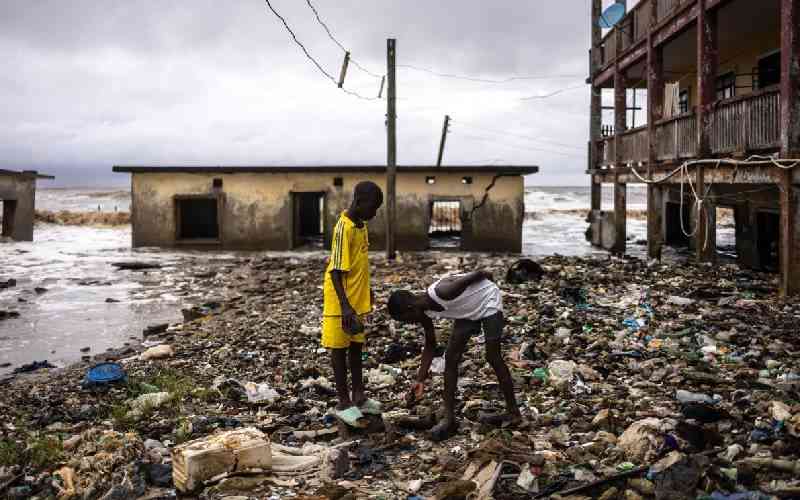
Children inspect debris washed ashore by the sea at the King's Palace damaged by coastal erosion in Ayetoro, Ondo State, on August 7, 2026. [AFP]
The beach shrinks every year in Ayetoro, in southern Nigeria, and what is left is peppered with the remains of homes swallowed by the ocean -- some years ago, some just months prior.
"We are walking on people's houses," said 35-year-old Thompson Akingboye, moving along a narrow strip of sand only accessible by boat.
Nicknamed "The Happy Place," Ayetoro -- home to around 10,000 people -- was founded in 1947 by a group of communist-inspired Christians seeking to create a society based on the communal sharing of assets.
But its days seem numbered, as the community becomes one of Nigeria's most visible victims of coastal erosion. Families whose homes are destroyed are constantly rebuilding further inland, only for the water to strike them again.
Coastal erosion in Ayetoro has steadily increased since the early 2000s. The story is the same in 19 other communities in Ilaje district. Aided by climate change, the Atlantic Ocean is encroaching and sweeping away everything in its path.
The town's coastline receded by an average of 15 meters (50 feet) every year between 1987 and 2022 according to a study by spatial planning specialist Barnabas Ogirima James.