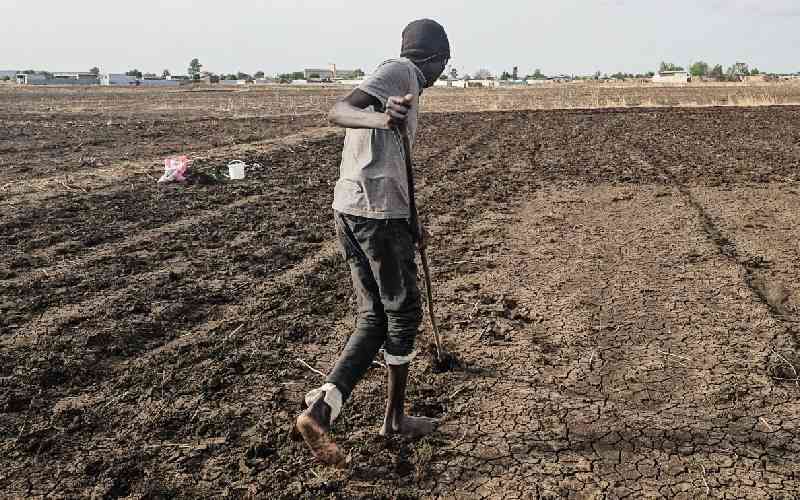
A Sudanese farmer ploughs agricultural land in Gedaref State, eastern Sudan, on July 18, 2026. [AFP]
Along the bone-dry riverbanks of the Nile in Sudan, farmers struggle to pull water to their crops. Others gather to pray for rainfall over cracked earth.
Across the country, farmland that could feed the world's largest hunger crisis many times over lies fallow, as weary farmers once again find themselves in the crosshairs of faraway destruction.
First came war between the country's army and rival paramilitaries, which since April 2023 has killed more than 200,000 people and pushed nearly 20 million into crisis levels of hunger.
Then a more distant conflict, between Iran and the United States, crippled fuel and fertiliser supply through the Strait of Hormuz, causing costs to soar.
And now the powerful El Nino climate pattern strengthening in the Pacific Ocean, which impacts winds and rains across the world, has delayed crucial rains and led water levels in the life-giving Nile to drop precipitously.
Just south of the capital Khartoum, farmer Al-Tigani Fadlallah points to an island that shouldn't be there.