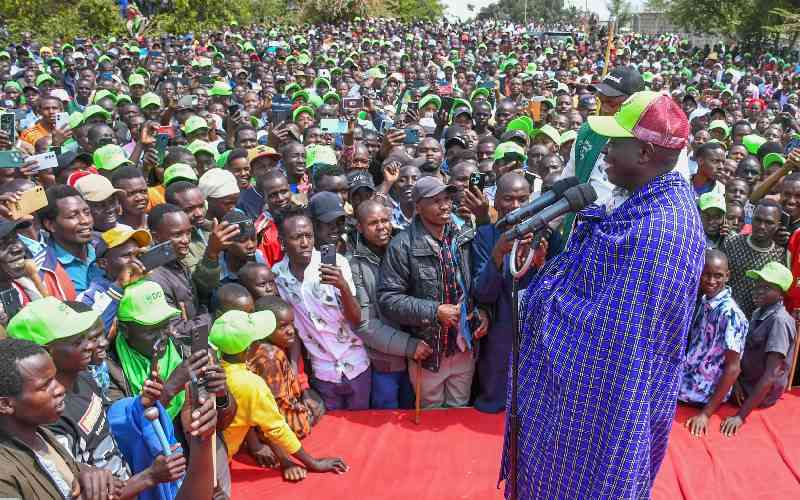
Former Deputy President and DCP leader Rigathi Gachagua addresses a rally at Mogondo, Emurua Dikirr, Narok County. [Kipsang Joseph, Standard]
As political tensions begin to ease, it is time for all political actors, whether from Team A, B or C, to reflect on a worrying trend that threatens the future of our society: The politicisation and exploitation of children.
This responsibility does not lie with politicians alone. Parents, guardians, relatives, teachers, religious leaders and the wider community all have a duty to protect children from being dragged into political battles before they are mature enough to understand and make independent choices.
We have seen children being taken to political rallies and gatherings, given political poems, songs and slogans designed to praise one side and condemn another. Some are used to attract crowds or create emotional appeal, while others are exposed to political confrontations and violence. In the digital space, children are sometimes encouraged to share partisan messages, insults and narratives they may not fully understand.
There is nothing wrong with teaching children about government, democracy, leadership, citizenship and their rights. In fact, civic education is essential. Children should understand how government works, why elections matter, the importance of the Constitution and their responsibility as future citizens.
But there is a clear line between educating a child about politics and recruiting a child into adult political battles.
A child may understand a political message, but that does not mean they possess the maturity to critically examine it, recognise manipulation or understand the consequences of hatred and division.