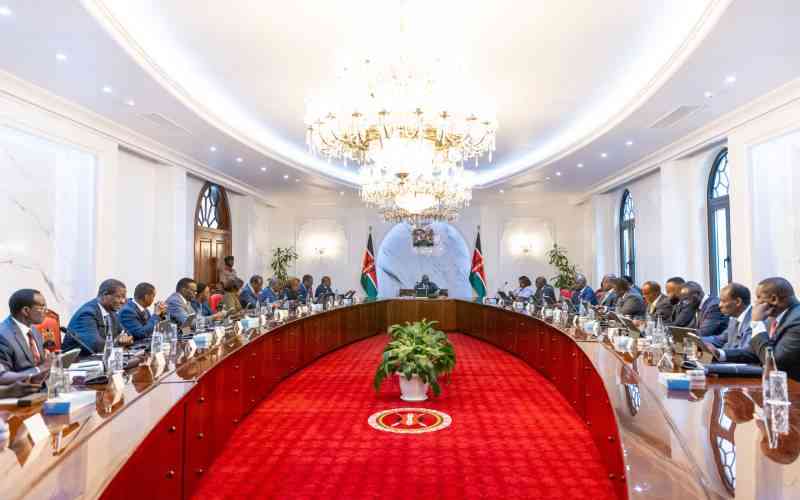
President William Ruto chairs a Cabinet meeting at State House, Nairobi. [File, Standard]
They say wine gets better with age—maybe the same can be said about leadership.
Don’t get me wrong. I’m not saying this because I am one of those who have been waiting to become future leaders all my life. Nor am I saying it because I have anything against the current crop of young leaders or the growing wave advocating for Gen Z leadership.
But if they want to become leaders, Gen Z and our so-called ‘young faces in leadership’ must show their credentials. They must show that they can lead and lead well. So far, they have not done this very well. As soon as they got appointed, the most futuristic ‘young leaders’ in government immediately embarked on changing their wardrobe and cars, and quickly adopting the mechanical mannerisms associated with power.
But then, maybe part of the argument against young faces in Ruto’s government is fueled by generational tensions within government, where older officials are forced to salute young fellows barely out of diapers and take instructions from baby faces that have no clue about the intricate operations of the institutions entrusted to them.
Which brings us to the question: Is the biggest weakness of Ruto’s government entrusting key positions to ‘professional juveniles’ who continue to expose his government’s soft underbelly to its fiercest critics through their handling of the dockets they have been mandated to run?
Let’s put it more bluntly: Should Ruto have put more experienced hands in key ministries in government such as Internal Security, Finance and Defence?
His predecessors did exactly that: President Daniel arap Moi entrusted the Internal Security docket to father figures like GG Kariuki and Justus Ole Tipis. President Mwai Kibaki trusted the security docket to old hands like John Michuki, George Saitoti and Yusuf Haji.