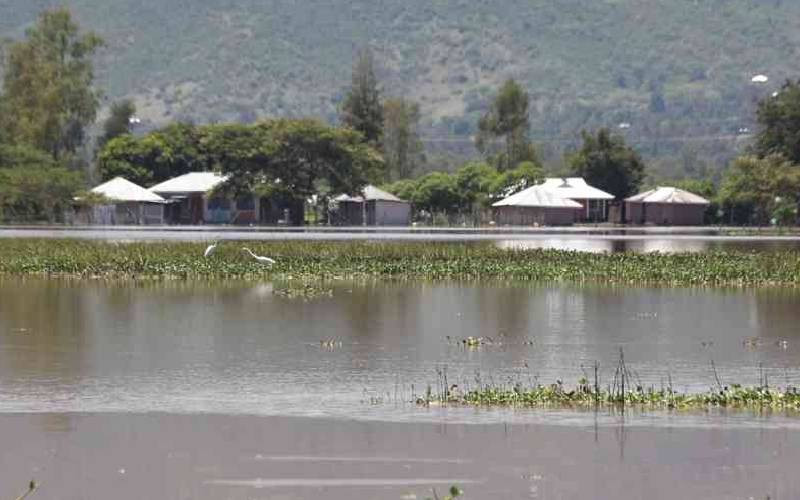
Homes marooned by floods in Kobala sub-location, Wang'chieng location, Homa Bay County. [File, Standard]
There is a difference between knowing that a disaster may happen and being ready when it does. For communities living in areas exposed to flooding, that difference can be measured in hours, sometimes even minutes.
Kenya is approaching the coming rainy season with a high likelihood of El Niño conditions. The Kenya Meteorological Department has warned of a high likelihood of El Niño, with its forecasts indicating an 85 per cent to 90 per cent probability of the conditions persisting through the end of 2026. For communities that have lived through destructive floods before, this is not information to put aside until the rains begin. It is a reason to start preparing now.
The temptation is to wait for the next forecast or until the first heavy rains arrive or worse still to wait until water starts rising or until an emergency is officially declared. But by then, some of the most important decisions may already be too late.
When floods happen, the first people to respond are usually those who are already there. A neighbour checks on an older person living alone. A family moves children and belongings to higher ground. Young people clear a blocked drainage channel. A community health worker checks on households that may need help. A farmer moves livestock to safer ground. These actions often happen long before an emergency team can reach an affected area.
Communities are therefore not simply recipients of assistance. They are the first responders.
This is why preparing for El Niño must begin at community level. It means asking what can be done now, while there is still time and before people are forced to make decisions under pressure.