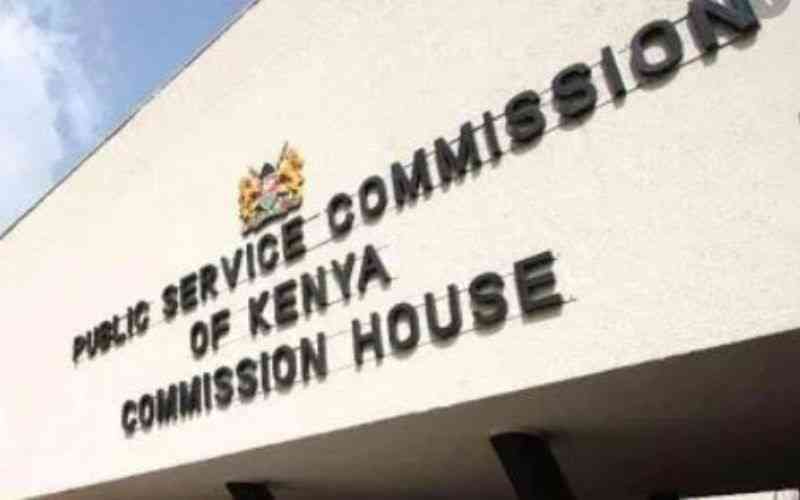
Public Service Commission office [File, Standard]
When we talk about corruption in Kenya, we reach instinctively for the dramatic. The briefcase. The inflated tender. The official caught with unexplained millions. The EACC raid. The arrested officer. These are the images that dominate our national conversation about governance failure, and they deserve the attention they receive.
But there is another form of governance failure that sits beside corruption in every public office in this country, costs ordinary Kenyans just as much, ruins just as many lives, and receives almost none of the same outrage. It has no dramatic photographs. Nobody is arrested for it. It does not generate breaking news alerts or parliamentary statements. It generates queues. And silence. And people who gave up.
It is called maladministration. And it is corruption's quieter twin.
Maladministration is not complicated. In the Kenyan context, it includes service failure, delay, inaction, inefficiency, discourtesy, and unresponsiveness in public offices. It is the file that sits on a desk for six months without moving. The application that was submitted correctly, completely, and on time, and has simply not been processed. The officer who does not return calls. The counter that is supposed to open at eight and opens at ten. The citizen who is told to come back tomorrow, and comes back tomorrow, and is told to come back again. The letter that was never written. The decision that was never communicated. The reason that was never given. The office that just does not serve.
None of these things require anyone to steal anything. And that is precisely why maladministration is so insidious and so underestimated as a governance problem.
Many of the complaints received from the public in many offices are of an administrative nature, the kind that could be effectively addressed by the Office of the Ombudsman rather than a criminal prosecution authority. That means the overwhelming majority of what Kenyans experience as governance failure in their daily lives is not the dramatic corruption that headlines cover. It is the quiet, grinding, daily failure of public administration to do what it is supposed to do, for the people it is supposed to serve, in the time it is supposed to serve them.
This is not being talked about enough. And the people it affects are not getting nearly enough help.