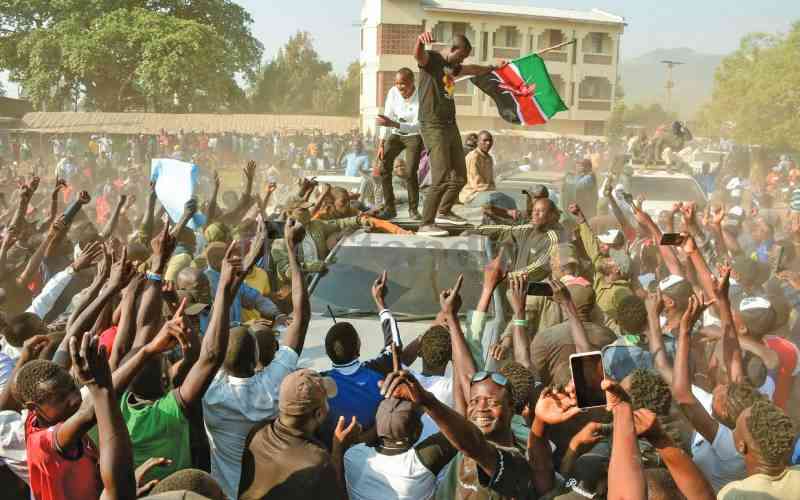
Nairobi Senator Edwin Sifuna and Embakasi East MP Babu Owino during the Linda Mwananchi rally in Homa Bay County on August 16, 2026. [Sammy Omingo, Standard]
Nairobi Senator Edwin Sifuna’s presidential ambition has done something few political projects in Luhyialand have scored in recent years: The wannabe has unsettled the established order.
The reaction from the old guard — Musalia Mudavadi, Moses Wetang’ula and Francis Atwoli — is revealing. These are not merely three senior politicians. Collectively, they represent decades of political experience, institutional influence and networks that have traditionally shaped the direction of the Luhya vote.
Their preferred script for 2027 has been relatively straightforward: Support President William Ruto, consolidate Western region’s influence within government and negotiate for the presidency later. Mr Mudavadi and Mr Wetang’ula have repeatedly been associated with the argument that 2027 is not their moment and that the community should position itself for 2032.
Sifuna is challenging that establishment script. His argument is deceptively simple: Why should Luhyas once again postpone their presidential ambition? Why should a community with substantial electoral numbers continue negotiating for tomorrow when it can seek the presidency today?
The message is resonating, particularly among younger voters who appear increasingly impatient with politics organised around elite bargains and deferred promises.
The significance of Sifuna's rise is therefore not merely that a young politician wants to be president. It is that he is challenging who gets to decide when Western's political moment has arrived.
The most uncomfortable development for the establishment, however, may be the growing support or openness from politicians of the older generation. Veterans such as Moody Awori, Noah Wekesa and Musikari Kombo’s political heyday predates Sifuna by decades. Their generation understands the difficulties of building a Luhya political consensus better than most.