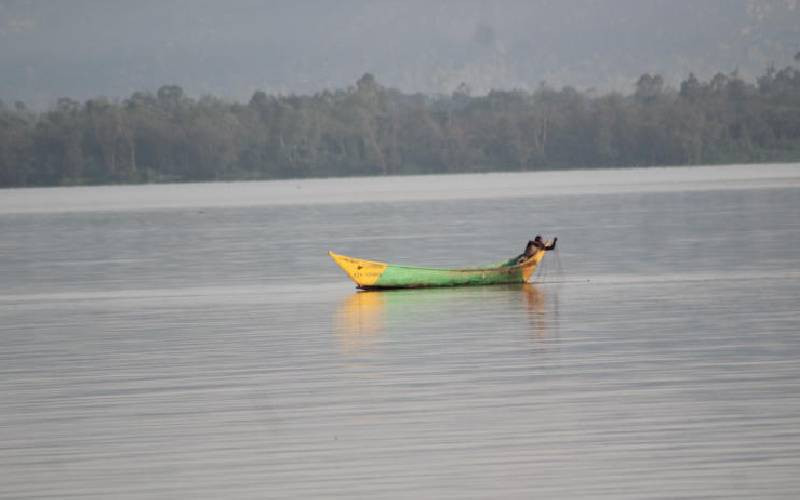
Uganda's expanding oil infrastructure is degrading wetlands within the wider Lake Victoria catchment. [File, Standard]
Every day, millions of Kenyans draw water, catch fish and earn a living from Lake Victoria. Yet few stop to consider where much of that water begins its journey.
Beyond Kenya's borders, an intricate network of wetlands in Uganda filters water, traps sediment, stores carbon and supports wildlife before rivers drain into East Africa's largest freshwater lake. Scientists warn that damage to these upstream ecosystems could ripple across national boundaries.
Those concerns have gained fresh urgency following the release of research alleging that Uganda's oil developments are degrading wetlands within the wider Lake Victoria catchment.
The findings come as construction advances on Uganda's oil infrastructure, including the East African Crude Oil Pipeline (EACOP), the Kingfisher feeder pipeline and the Victoria Nile Pipeline Crossing, projects that underpin the country's emerging petroleum industry.
The research links the developments to siltation, air pollution, habitat disturbance and increased human activity in ecologically sensitive areas. Among the sites identified is the Kibale/Bukoora wetland, part of the internationally recognised Sango Bay-Musambwa Island-Kagera (SAMUKA) Ramsar wetland system.
Published this week by the Africa Institute for Energy Governance (AFIEGO), the report argues that the environmental impacts are already emerging in wetlands that regulate water flows, sustain fisheries and support biodiversity. Researchers documented evidence of environmental degradation and increased human-wildlife conflict in five districts hosting oil infrastructure.
The findings are mostly significant for Kenya because several of the affected wetlands form part of the broader Lake Victoria Basin, a shared ecosystem relied upon by communities in Kenya, Uganda and Tanzania.