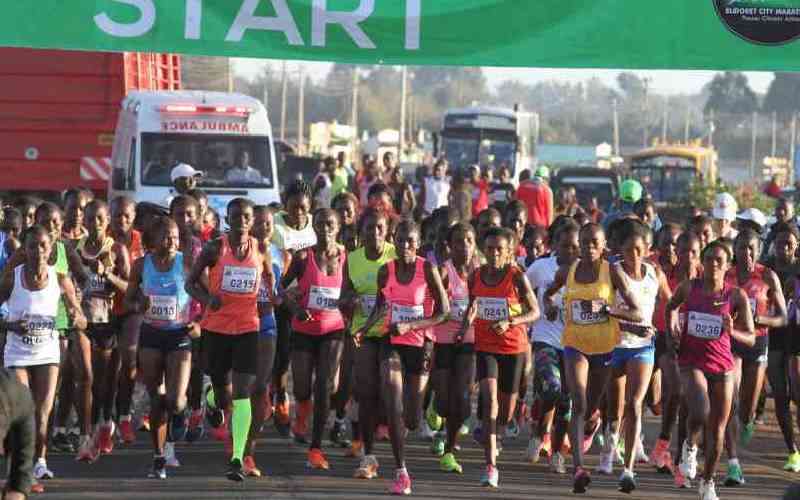
Athletes compete in the 42km women race during the 2nd Eldoret City Marathon in Uasin Gishu County on April 21, 2019. [File, Standard]
Go up to Iten on any ordinary weekday and watch who is actually running. Watch the visitors. The Norwegian who travels with a physiologist. The Briton whose coach carries a tablet full of heart-rate data from the last six weeks. The Japanese group with its own nutritionist and a physiotherapist who goes everywhere they go.
They rent our altitude. They borrow our trails. Then they fly home and beat our athletes using knowledge they collected on our own hills.
Kenya has never lacked talent. Anyone who has stood at the finish line of a county cross country meet knows that much. What we lack is the machinery to turn talent into a long career, and a long career into medals across more than two or three disciplines.
We still find athletes by accident. A boy running to school. A girl who happens to win a county race and happens to be seen by someone who happens to care. Then we lose too many of them to injuries a decent screening programme would have flagged a year earlier.
And when a Kenyan tests positive for doping, we discuss it as a private moral collapse. Sometimes it is. Often it is duller and sadder than that, which is an athlete preparing with no scientific support of any kind, reaching for a chemist's shelf because nobody ever offered him a laboratory.
The countries that overtook us did not have better runners. They had better institutions.