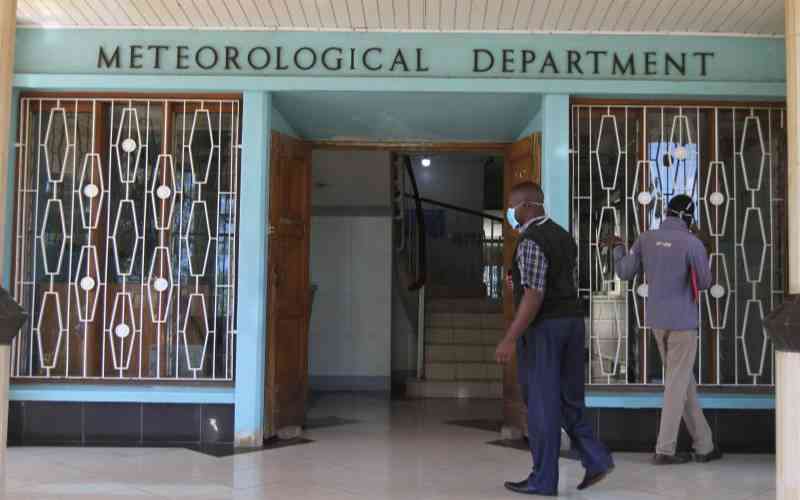
The Kenya Meteorological Department Headquarters in Nairobi. [Elvis Ogina, Standard]
Kenya's weather experts have now put a number on what many had been treating as speculation. The Kenya Meteorological Department estimates an 81 per cent probability of a very strong El Niño this year, bringing above-normal rainfall across most of the country during the October to December short rains, and a 97 per cent chance that the event extends into early 2027.
For finance leaders, that is not just a forecast but a planning assumption. Most people will read this as a story about farming and flood preparedness. They should also read it as a story about finance.
Start with power. A telecommunications network is a large consumer of electricity, with thousands of base stations operating around the clock. When storms bring down power lines, sites switch to batteries and then to diesel generators, the most expensive electricity any operator buys. Those generators must then be refuelled by trucks travelling on roads the same rain has damaged.
Extended cloud cover creates another challenge. At Safaricom, we have converted 2,002 sites to solar power on our journey towards 5,000, and green energy now powers 35 percent of our network.
A heavily overcast quarter reduces the output of those solar panels precisely when the national grid is least reliable, forcing deeper battery cycles and accelerating replacement schedules.
The story, however, does not end with higher costs. Full dams increase hydropower generation and can moderate national electricity prices.
Stronger harvests raise rural incomes, increasing the economic activity and digital transactions that follow.