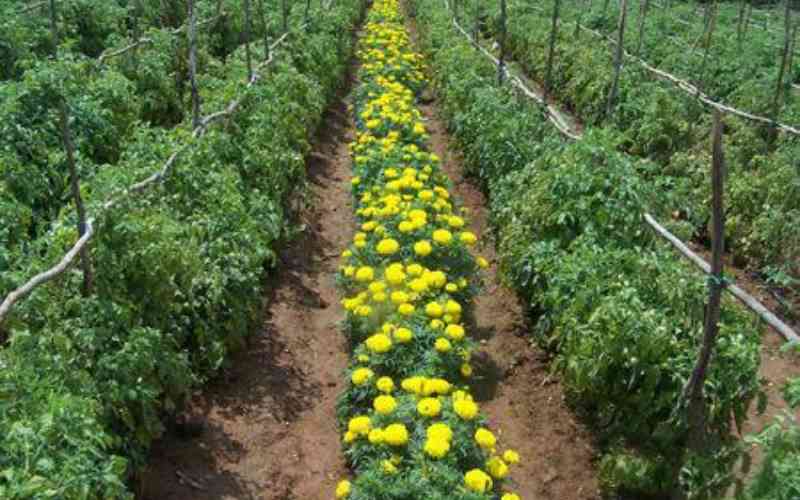
Herbal farming is creating jobs, empowering women entrepreneurs, and diversifying Kenya's agricultural exports .[File, Standard]
The road to Kisaju in Kajiado County is dusty. The morning air is crisp, and the landscape looks dry for miles. It is not the kind of place one would expect to find lush greenery. Yet beyond the brown plains stand rows of greenhouses where herbs and spices destined for international markets flourish.
It is here, at Citadel Farm, that Kenyan women farmers are transforming acres of arid land into thriving export enterprises. Backed by modern cold-storage facilities that preserve quality from harvest to shipping, they grow basil, rosemary, thyme, and other high-value herbs bound for supermarket shelves and restaurant kitchens across Europe and the Middle East.
Inside the bustling farm, workers sort fresh cuttings while Yvonne Mumia Anyonyi, dressed in a red dust coat, debriefs her team. Nearby, a group of visiting women looks on, eager to benchmark her techniques for their own ventures.
Yvonne was once a pilot with JamboJet Airlines. Today, she is a commercial farmer, having traded her flying career a little over a year ago for agribusiness.
"I started last year, right after I put my job down," she says. She leased 15 acres of land and initially set up eight greenhouses, alongside five acres of onions and nine acres of chillies.
The capital required to establish the infrastructure was substantial. "We needed almost Sh15 million to Sh20 million just to start," Yvonne explains. To raise it, she made a high-stakes bet on her vision: "Yeah, I sold three of my houses to start this project."
It wasn’t a lifelong love for agriculture that pulled her in, but a desire for financial independence and community impact. "What I was passionate about was having my own business, one that has an impact on the community and society," she says. "I’m more of an analytical person. I like my numbers, so I did my data and analysis, and I found that this thing is actually good. Every shilling I made in those early months went straight back into the farm."