Lead image for How Namibia reminded me about Mau Mau.
When I was young, in our little house in Nairobi, my father would sometimes say, “Ningaceduka Resaf”( I will rush to Resaf briefly, but I will be back). I would be confused. Why was my father calling our home in Gatundu “Resaf”? It was only much later that I understood that he meant “reserve”.
He had been born at the height of the Mau Mau uprising, and “reserve” was part of the language of colonial Kenya. The Kikuyu Land Unit, a restricted native reserve, was created after fertile ancestral lands were alienated for European settlement. “Reserve” therefore carried a history of dispossession.
I remembered his story last week in another reserve, thousands of kilometres away, in Katutura, on the outskirts of Windhoek, Namibia. We went to Katutura by chance. After our city tour, our driver offered to take us for roast meat. “Let me show you the real Windhoek,” he said. Katutura means “the place where people do not want to live” in Otjiherero. During the apartheid era of South African rule, Black Namibians were forcibly removed from the Old Location, a vibrant community close to Windhoek’s centre, and relocated to the segregated township.
As I drove through Katutura, my father’s “Resaf” made sense. Different country, different colonial power, but the same language of dispossession: take the land, move the people and leave inequalities that survive after colonial rule.
I visited Christuskirche, the Lutheran church in Windhoek. Inside, bronze plaques preserve the names of German soldiers, marines and civilians who died during the colonial wars involving the Herero and Nama. Between 1904 and 1908, German forces carried out genocide against the Ovaherero and Nama.
An estimated 85,000 Ovaherero and 20,000 Nama were killed through massacres, forced displacement, starvation, dehydration, disease and imprisonment in concentration camps. Their land and cattle were seized, attacking the foundations of their economic and cultural life. Yet inside this church, it is only the names of the German dead inscribed.
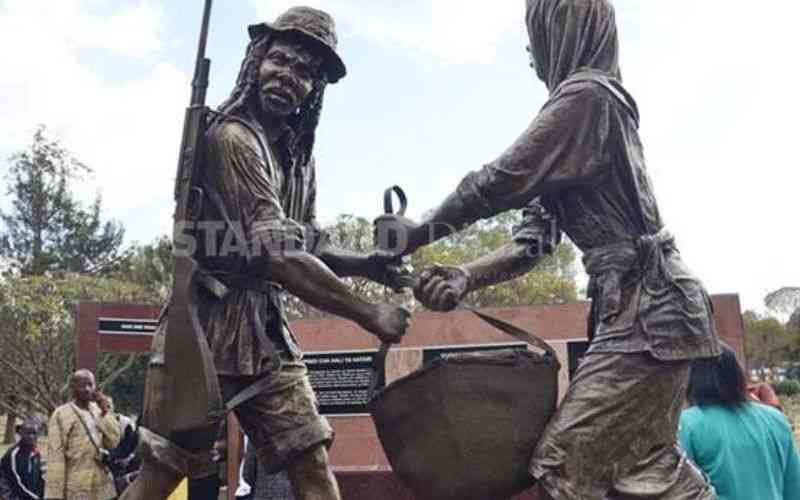
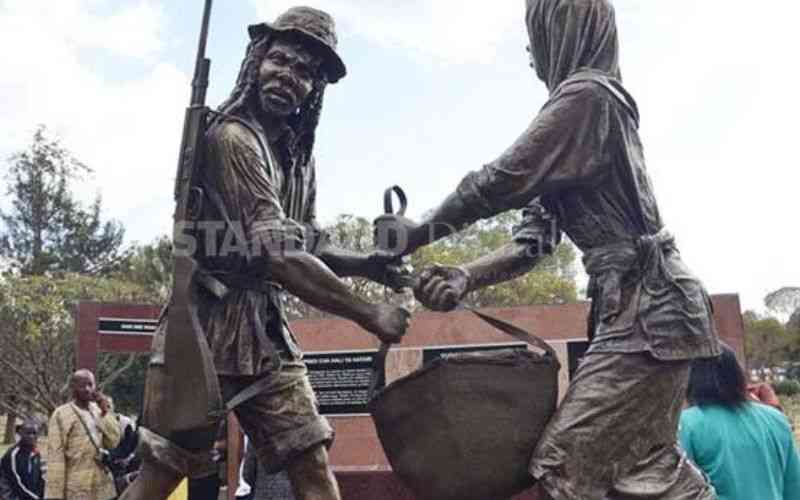
I could not help thinking about Kenya. We have monuments to wars and soldiers, but where is the equivalent memorial space for Africans detained, tortured and killed during Mau Mau? Whose suffering becomes part of permanent memory, and whose disappears?