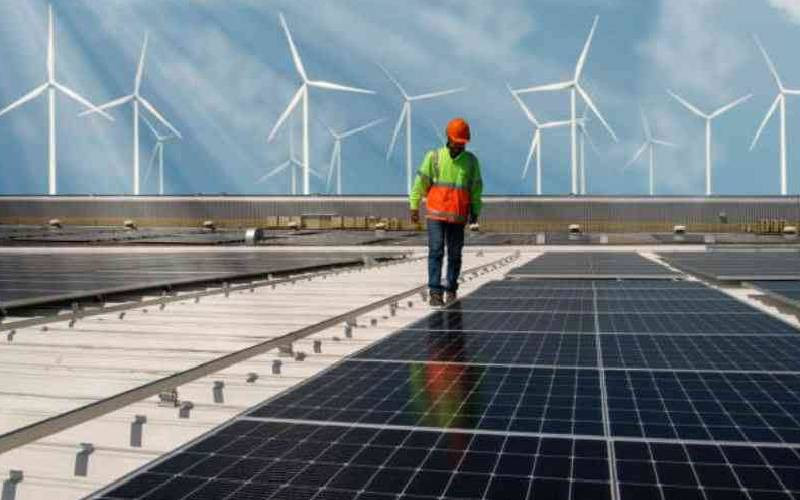
Kenya has already demonstrated that renewable energy can power national development. [Courtesy]
Kenya is often hailed as one of Africa’s clean energy success stories.
With more than 90 per cent of its electricity generated from renewable sources such as geothermal, hydropower, wind and solar, the country has earned international recognition for reducing dependence on fossil fuels while expanding access to electricity.
The achievement has made Kenya Africa's leading producer of geothermal energy and the world's seventh-largest producer, placing the country among global leaders in renewable energy.
However, the production of clean electricity is only one part of the journey in the quest for a carbon-free nation. As climate change intensifies and countries race to reduce carbon emissions, the bigger question is whether Kenya can extend its renewable energy success into various sectors of the economy that rely heavily on fossil fuels.
Achieving a truly carbon-free economy requires coordinated action that goes far beyond the energy sector itself.
It is against this backdrop that researchers at Strathmore University have examined Kenya’s requirements to accelerate its transition towards a carbon-free future. Their study argues that while the country has built an impressive foundation, achieving net-zero emissions will depend on stronger policies, greater investment, technological innovation and closer collaboration between stakeholders.
The researchers argue that decarbonisation is not only an environmental obligation but also an opportunity to strengthen economic growth, create jobs and improve the country’s long-term resilience.