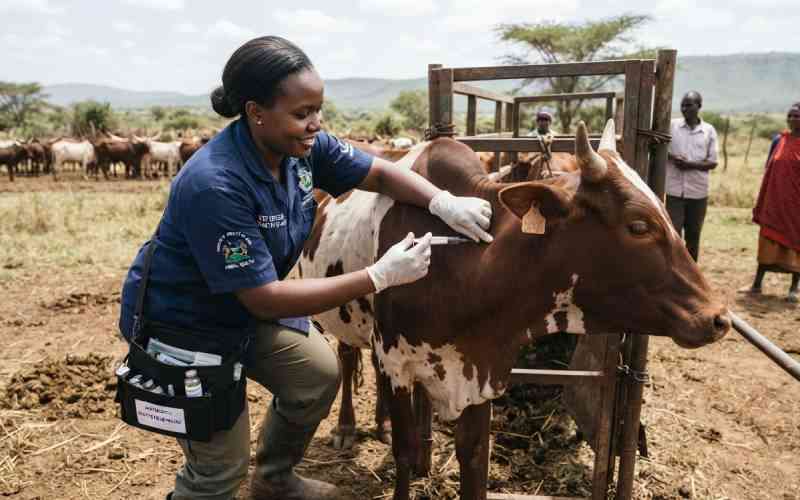
Farmers are key to fighting antimicrobial resistance through responsible medicine use and prevention. [Courtesy]
Antimicrobial resistance (AMR) is emerging as one of the most serious threats to global health, food security and sustainable development. Antimicrobial resistance occurs when bacteria, fungi, viruses and parasites adapt over time in away that they can not be killed by medicines that were once effective against them.
Agriculture is increasingly becoming an important sector in both the development and prevention of AMR. Livestock and crop farmers play a critical role in ensuring food security, but farming practices can also influence the spread of resistant microorganisms.
Fortunately, farmers are not only part of the challenge but also a crucial part of the solution.
Across many agricultural systems, antimicrobials are used to protect livestock from diseases and to safeguard crop production from infections.
In livestock farming, antimicrobials are used to treat sick animals, prevent disease outbreaks and, in some countries, support growth and productivity. In crop production, antimicrobial products such as bactericides and fungicides are applied to control plant diseases and improve yields.
However, the inappropriate use of these products can contribute significantly to antimicrobial resistance. When antimicrobial is used excessively or incorrectly in livestock, or when antimicrobial products are applied indiscriminately in crop production, disease-causing organisms can develop resistance, making future treatments less effective.
For livestock farmers, antimicrobial resistance often develops when medicines are administered without proper diagnosis, when the wrong medicine is used, or when treatment doses and durations are not followed correctly.