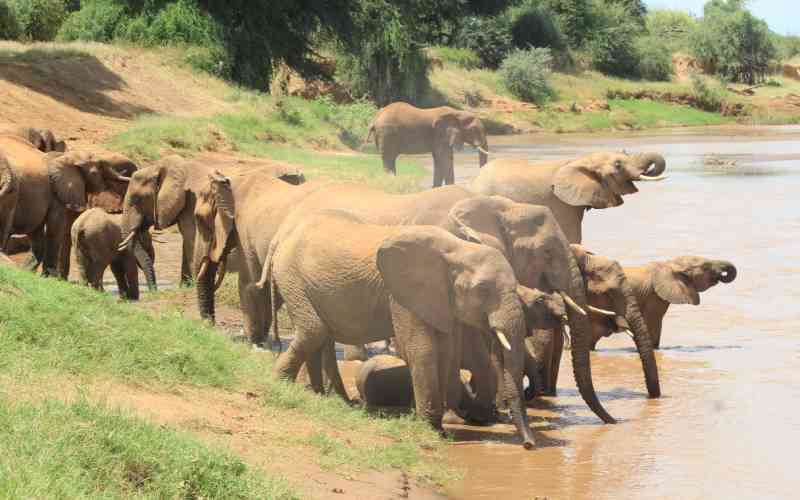
The Elephants in Samburu Reserve. [Benard Orwongo, Standard]
For decades, sightings of elands, lesser kudus and African wild dogs made Samburu National Reserve one of Kenya’s premier wildlife destinations. Alongside elephants, Grevy’s zebras and other iconic species, these animals helped define the reserve’s unique biodiversity.
Today, however, conservationists warn that many of these species are disappearing as expanding human settlements, habitat encroachment and climate change continue to reshape northern Kenya’s fragile ecosystem.
Wildlife experts say populations of several species have declined significantly over the past decade, with some becoming increasingly rare in areas where they once flourished.
David Daballen, Head of Field Operations at Save the Elephants (STE), attributes much of the decline to human encroachment into critical wildlife habitats and migration corridors.
“Human activities, particularly encroachment into wildlife spaces, have significantly disrupted the movement of these animals,” Daballen told The Standard during a tour of Samburu National Reserve and the Oldonyiro Wildlife and Livestock Corridor.
As communities expand in search of livelihoods through urbanisation and agriculture, traditional wildlife routes that have existed for generations are increasingly being blocked. Conservationists say this has heightened the urgency of restoring and protecting key migration corridors.
One of the most affected areas is Oldonyiro in Isiolo County, where the rapid expansion of the trading centre has narrowed a vital migration route linking the Samburu and Laikipia ecosystems.