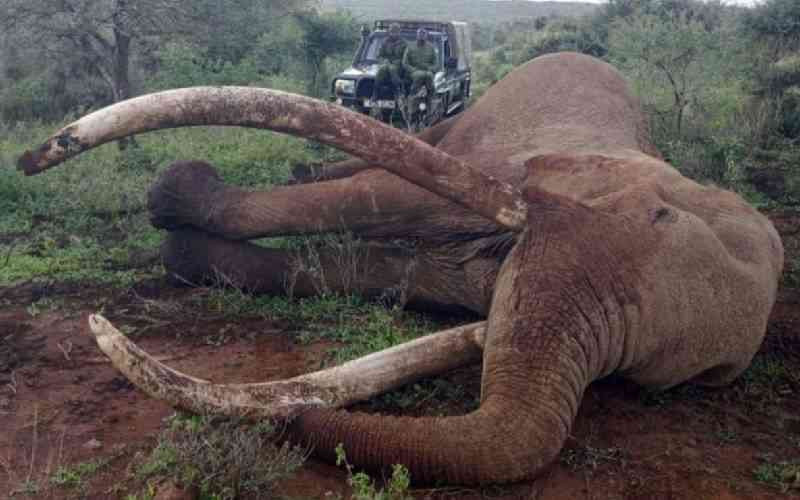
The renowned elephant known as Graig dies aged 54. [Courtesy]
Fifteen elephants recently died in the Amboseli ecosystem. Preliminary reports suggest that the animals consumed tomatoes containing high levels of cyanide, possibly linked to pesticide contamination on nearby farms.
While officials say the toxin poses no immediate threat to human life, they have warned local herders to keep their livestock away from the contaminated fields.
Perhaps there is no immediate danger to people. But history suggests we should pay close attention anyway.
Wildlife does not simply die. Sometimes it warns. The tragedy is that we, humans, often understand the warning only after it becomes our own.
History has taught us this lesson before. In the 1950s, residents around Japan’s Minamata Bay noticed animals behaving strangely. Cats staggered, convulsed and even threw themselves into the sea. Birds fell from the sky. Fish floated lifeless on the water. Much later, experts discovered mercury poisoning in the bay. By the time the contamination was fully understood, thousands of people had developed devastating neurological disease after consuming contaminated seafood.
Here in Kenya, 12 years ago, residents of Owino Uhuru were exposed to severe lead poisoning before the contaminant’s presence in the human environment was fully recognised. This followed reports of unexplained deaths among livestock and pets exposed to contaminated grass and soil.
From these tragedies, it is evident that environmental failures rarely remain environmental. They eventually become public health failures.