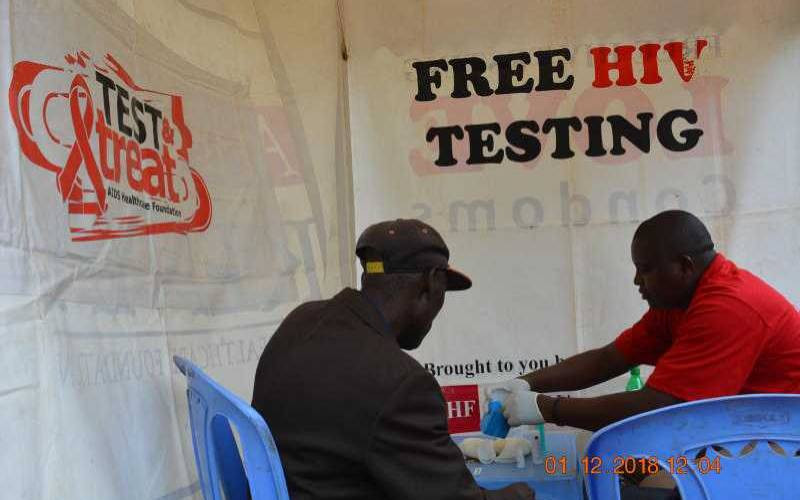
A man undergoes HIV testing. Funded by the US President's Emergency Plan for AIDS Relief (PEPFAR), Stawisha Pwani was implemented in Coast counties. [File, Standard]
County governments face a major test in sustaining primary healthcare services after a key health partner formally exited the programme.
The transition of the donor-funded Stawisha Pwani project places greater responsibility on counties to sustain HIV, Tuberculosis (TB) and laboratory services, raising concerns over whether gains made under the five-year programme can be maintained.
Funded by the US President’s Emergency Plan for AIDS Relief (PEPFAR), Stawisha Pwani was implemented in Mombasa, Kilifi, Kwale and Taita Taveta counties to strengthen their capacity to own, manage and deliver integrated HIV services.
The project was implemented by a consortium comprising LVCT Health, the Center for International Health, Education and Biosecurity (CIHEB)-Kenya and Amref Health Africa in Kenya.
The transition now puts counties on the spot to maintain treatment gains, keep laboratory services running and ensure patients do not experience disruptions following the donor exit.
Stawisha Pwani chief of party and project director Dr Patrick Oyaro said sustainability should remain at the centre of the transition to prevent disruption of primary healthcare services.