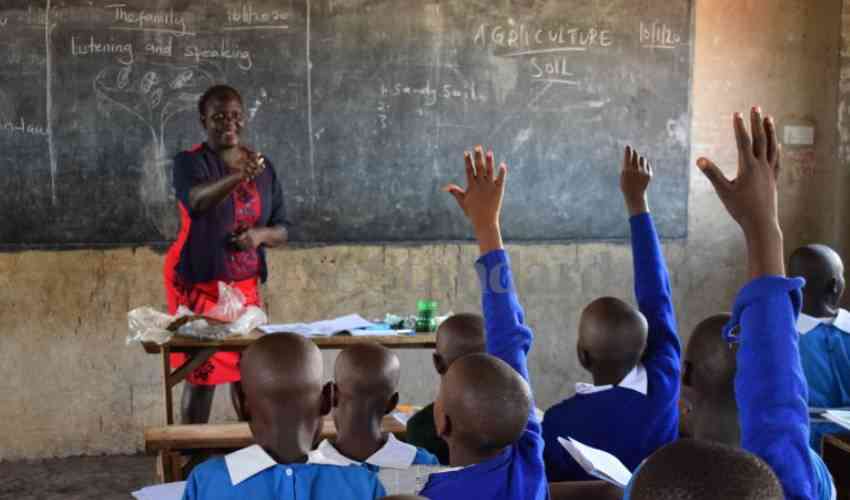
New school clusters fail to bridge Kenya's education inequality gap - report. [File, Standard]
Kenya’s reclassification of secondary schools has done little to change longstanding disparities in resources and learning opportunities, a new report says.
An analysis of the 2024 KCSE results found that learners in schools classified as Cluster One were more likely to attain a mean grade of C+ and above than those in Cluster Four schools, according to Usawa Agenda.
The third Senior School Survey Report found that a learner attending a Cluster One Senior School, the new category broadly corresponding to former national schools, had 8.37 times the odds of attaining C+ and above compared with a learner in a Cluster Four school, which broadly comprises former sub-county schools.
The findings come as Kenya continues to roll out Competency-Based Education (CBE), with the first cohort of CBE learners now in Senior School.
For ease of understanding, the four categories broadly correspond to the former school classifications: Cluster One comprises former national schools, Cluster Two comprises former extra-county schools, Cluster Three comprises former county schools, and Cluster Four comprises former sub-county schools.
The report describes Cluster Four schools as the majority of schools and the institutions educating the majority of learners, yet says they continue to lag in resource allocation and national examination performance.