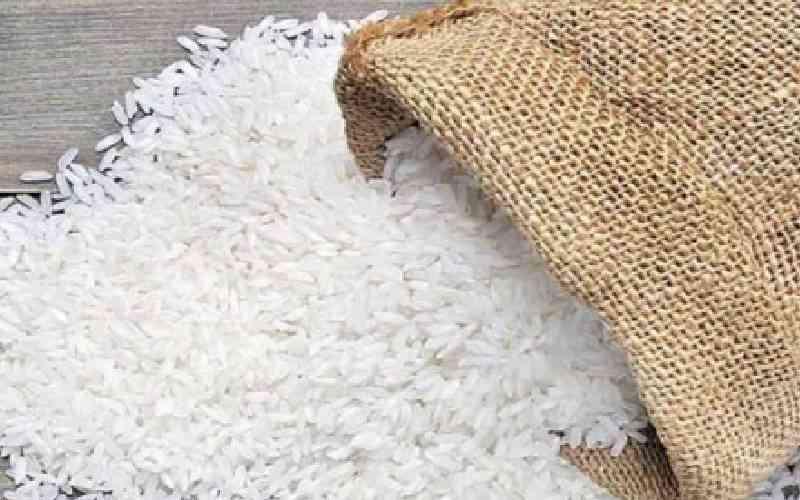
Cofek has raised concerns over adulterated and falsely labelled Kenya Pishori rice. [Courtesy]
If you walk to either a supermarket or a retail shop, you will not miss rice branded either as pure Kenya pishori or blended pishori.
However, the aroma may feel the same, but the outcome and taste may be different.
An intriguing court case now lifts the lid of your pot to reveal that your rice, allegedly, is not the authentic Kenya pishori rice.
In its case, the Consumer Federation of Kenya (Cofek) has sued the Ministry of Investments, Trade and Industry Cabinet Secretary, the Kenya Bureau of Standards (KEBS) and the Attorney General, accusing them of failing to tame the menace of adulterating the rice and mis-labelling to hoodwink Kenyans.
The case follows a complaint lodged by the Kenya Association of Manufacturers (KAM), which lamented that despite the country having enough, tenderpreneurs are making a kill out of either buying Kenyan pishori at a throwaway price and blending it with imported rice for a rich aroma.
This, the manufacturers said, is slowly killing the rice industry as it spreads beyond a single product.
In court, Cofek said that despite the government and KEBS being aware, there have been no raids or recalls of rice brands that are not genuine Kenyan pishori.