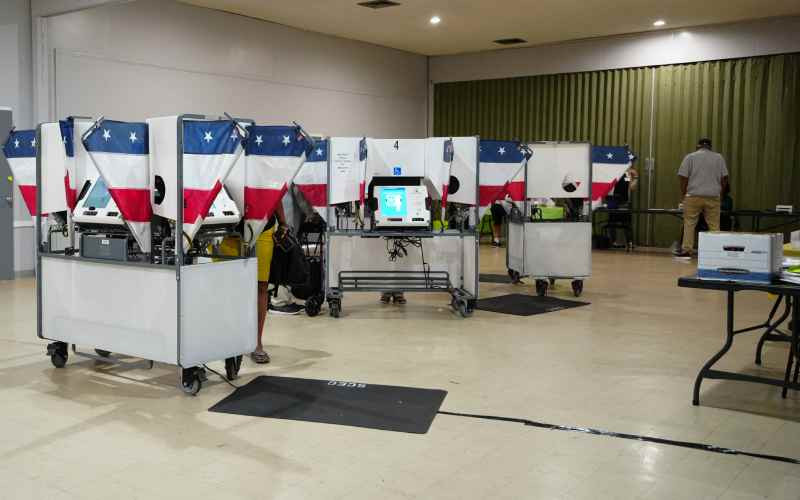
People cast ballots at a voting center on the last day of early voting in Memphis, Tennessee, on August 1, 2026. [AFP]
For Jadu Bin Ahmed Bin Hassan, a 76-year-old African American who grew up in segregated Memphis, a move by Republicans to split the majority-Black city among three US congressional districts smacks of the racist policies of the last century.
"As a child, you couldn't even go to certain stores... because they would not sell to you. You see, it was so prejudiced and so racist here," he said of the southern state of Tennessee.
"And it still is, and it's not changing, right? It's not changing."
Dressed in a beige suit and a silk scarf, Bin Hassan spoke to AFP at the Memphis Islamic Center as it hosted a candidate forum, during which voters could also learn about the new districts.
Tennessee's Republican-controlled legislature redrew the congressional map in May, days after the US Supreme Court rolled back civil rights protections that had ensured at least one of the state's nine districts remained majority Black.
That district had been Tennessee's 9th, which encompassed Memphis and was reliably won by Democrats.