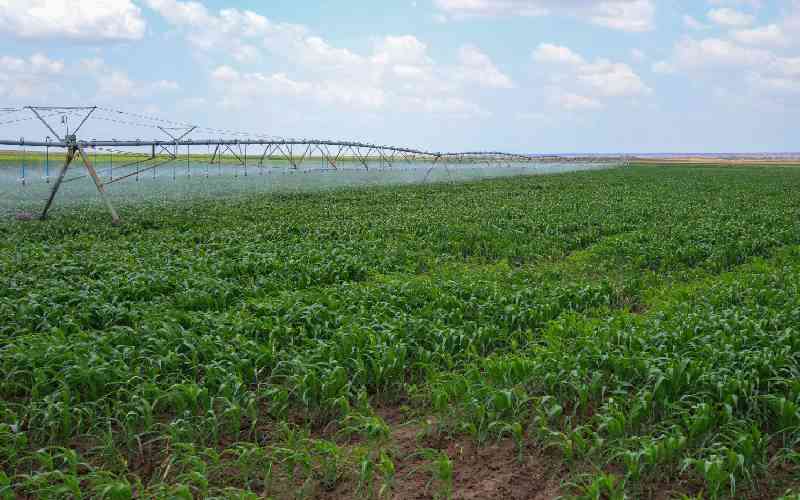
Maize under irrigation at Nyumba Agri Farm in Galana-Kulalu in Kilifi County. [Robert Menza]
African leaders, policymakers, farmers, financiers and development partners will convene in Kigali, Rwanda, on August 31 for The Africa Food Systems Forum 2026 to grapple with an age-old question: How will the African continent produce more food, create more jobs and build resilience in a rapidly changing world rife with climate risk, population increase and rising urbanisation?
Too often, water is treated as a secondary issue in Africa’s agricultural transformation agenda; something for the water sector to address while agriculture, finance and trade pursue their own priorities. This must change.
Around 90 per cent of cultivated land in sub-Saharan Africa is rainfed, compared with 37 per cent in Asia. Only about 6 per cent is irrigated. For millions of farmers, late rainfall, a failed rainy season or devastating flood can determine whether a harvest becomes food and income—or debt and loss. This is not simply a problem of too little water but one of insufficient investment in managing the water we have.
Africa’s food systems cannot become resilient if its water systems remain fragile. We cannot sustainably grow agricultural economies while leaving farmers exposed to every rainfall shock. And we cannot seriously plan to feed 2.5 billion people by 2050 without securing the water needed to produce that food.
Across Africa, however, examples of what better water management can achieve abound. In Kenya, farmer-led irrigation and solar-powered pumps are helping smallholders overcome rainfall limitations. Kenya’s pay-as-you-go solar-pump market exceeded US$38 million in 2023, demonstrating farmers’ willingness to invest when appropriate technologies and financing are available.
Further east in Rwanda, women manage 35 per cent of farmer-led irrigation development plots where factors like access to land and credit are met, and the Hinga Wunguke scheme has linked women irrigators to digital marketplaces, cutting post-harvest losses by 15 per cent.