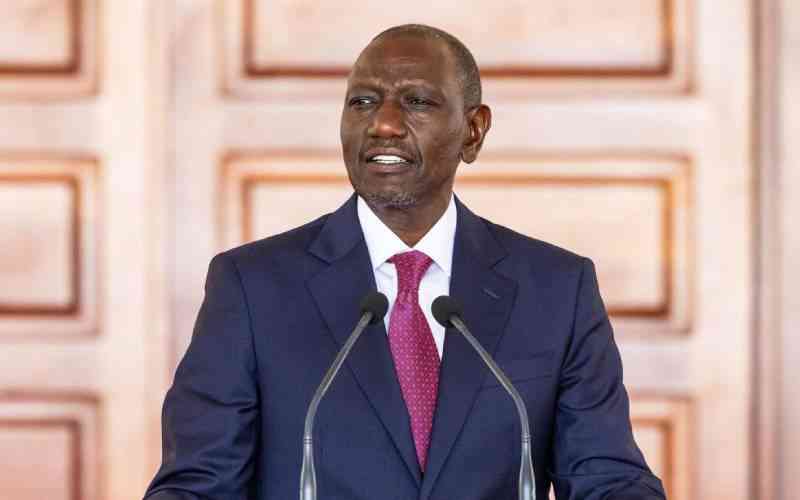
Lead image for A new plan alone won't make Kenya first world.
Prof Anyang' Nyong'o's "Road to Singapore" deserves serious reading because it arrives when Kenya is preparing to leave Vision 2030 behind. Public debt is pressing against national ambition, young people are entering an economy that cannot absorb them properly, and President William Ruto is searching for a longer development story than annual Finance Bills can provide.
Nyong'o's central argument is difficult to dismiss. Kenya has had many false starts. We have written plans, created institutions, built roads, changed governments and announced fresh beginnings, yet the country has not crossed into the productive depth expected of a high-income industrial society.
Nations that transform do not stumble into prosperity. They protect continuity, discipline implementation and hold a national purpose long enough for one generation to hand it to another.
That argument carries particular weight coming from him. Nyong'o was part of the intellectual imagination that gave Kenya the National Economic and Social Council and later Vision 2030. He also comes from a social democratic tradition that should understand development as something deeper than growth figures and investor confidence. Road to Singapore should be welcomed with respect, but not received with folded hands.
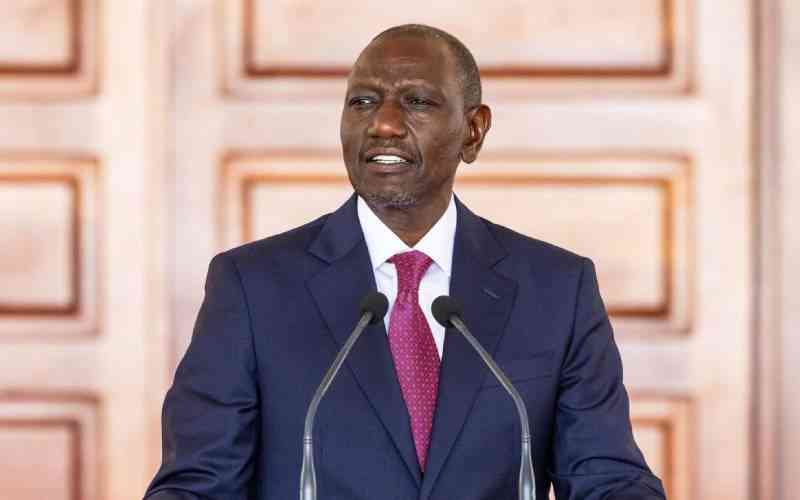
President Ruto seems to agree with the diagnosis, at least in principle. Receiving the report at State House last week, he said "development cannot be the project of one administration," and that no election should force the country to abandon one vision to start another. That is the right instinct. It is also a promise that can be held against him. A president who says this in July should not be the same president reorganizing priorities around a different slogan in 2028.
The question is not whether Kenya needs long-term planning. The evidence of drift is already before us. The question is whether the next plan will escape the old development imagination that has survived many governments. Sessional Paper No. 10 of 1965 had its historical moment, but it also left behind a center-periphery instinct in which development moved first to areas considered ready, while other regions were asked to wait.
Kenya cannot approach 100 years of Independence with that imagination repackaged in “first-world” language. A post-Vision 2030 plan must do more than improve coordination from above. Citizens need to become producers, workers, taxpayers, rights-holders and co-authors of the republic's future, not the audience for a plan written mainly through State House, experts and delivery units. Cleverness is not national ownership.