
Lead image for Cassava: The promising future of a toxic but nourishing crop.
The three staple crops dominating modern diets – corn, rice and wheat – are familiar to Americans. However, fourth place is held by a dark horse: cassava.
While nearly unknown in temperate climates, cassava is a key source of nutrition throughout the tropics. It was domesticated 10,000 years ago, on the southern margin of the Amazon basin in Brazil, and spread from there throughout the region. With a scraggly stem a few meters tall, a handful of slim branches and modest, hand-shaped leaves, it doesn’t look like anything special. Cassava’s humble appearance, however, belies an impressive combination of productivity, toughness and diversity.
The three staple crops dominating modern diets – corn, rice and wheat – are familiar to Americans. However, fourth place is held by a dark horse: cassava.
While nearly unknown in temperate climates, cassava is a key source of nutrition throughout the tropics. It was domesticated 10,000 years ago, on the southern margin of the Amazon basin in Brazil, and spread from there throughout the region. With a scraggly stem a few meters tall, a handful of slim branches and modest, hand-shaped leaves, it doesn’t look like anything special. Cassava’s humble appearance, however, belies an impressive combination of productivity, toughness and diversity.
It begins with grinding cassava’s starchy roots on shredding boards studded with fish teeth, chips of rock or, most often today, a rough sheet of tin. Shredding mimics the chewing of pests, causing the release of the root’s cyanide and cyanohydrins. But they drift away into the air, not into the lungs and stomach like when they are eaten.
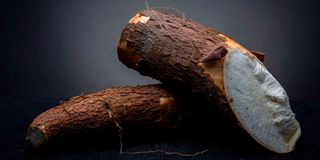
Cassava is naturally loaded with cyanide, making it deadly if eaten raw.